Vietnamese Phin Coffee is more than a drink — it’s a living cultural ritual. Discover its rich history, bold flavors, and why every Vietnam itinerary needs this iconic slow-drip experience.
☕ Vietnamese Phin Coffee Is Not Just a Drink. It’s a Ritual.
article content
Vietnamese Phin Coffee is one of the most culturally charged, sensory-defining, and underrated rituals in all of Southeast Asian travel — and if you’ve sat on a tiny plastic stool on a Hanoi sidewalk, watching a small metal filter drip slowly into a glass of condensed milk, you already understand why.
You felt it before you took the first sip. That quiet, almost meditative patience. That warm anticipation. That singular moment when the world slows down just enough for you to actually be somewhere.
At our DMC, we don’t just take travelers to Vietnam. We bring them into Vietnam. And nothing does that more powerfully, more immediately, or more memorably than a cup of cà phê phin shared with the right story behind it.
This is that story.
🔑 Secret #1 — Vietnamese Phin Coffee Was Born From Resistance, Not Convenience
The story of Vietnamese Phin Coffee begins not with the Vietnamese, but with the French. In 1857, French colonists introduced coffee cultivation to Vietnam, planting the first arabica seeds in the Central Highlands — a region destined to become one of the world’s most prolific coffee-growing landscapes. But what the French brought as a colonial commodity, the Vietnamese transformed into something fiercely their own.
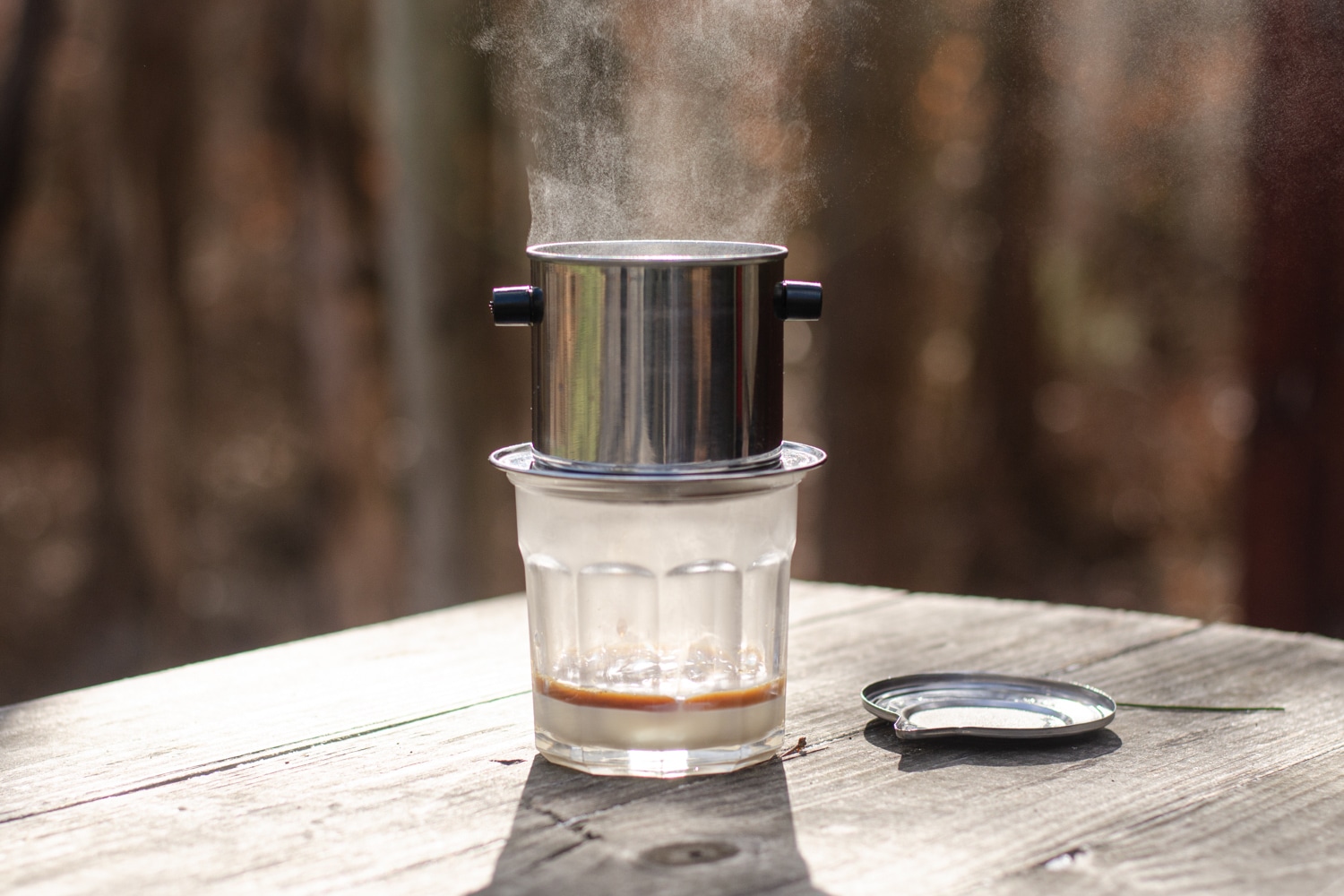
Without access to expensive espresso machines, Vietnamese people engineered a brilliantly simple solution: the phin filter — a compact, stackable stainless steel or aluminum drip brewer made of just four parts: a perforated base plate, a brewing chamber, a press filter, and a lid. No electricity. No moving parts. No barista certification required.
What emerged from this humble device wasn’t a compromise — it was a masterpiece. The slow-drip method extracts coffee at a pace that produces a brew far richer, thicker, and more aromatic than most Western filter techniques. Combined with Vietnam’s robusta-dominant beans — bold, chocolatey, and slightly bitter — the Vietnamese Phin Coffee produces a cup unlike anything else on earth.
Over generations, the phin became embedded in Vietnamese identity. Through the war years, through Đổi Mới economic reforms, through everything — the phin remained constant. A small, powerful act of continuity.
🔑 Secret #2 — Vietnam Is the World’s Second-Largest Coffee Producer (And Almost Nobody Talks About It)
Most travelers arrive in Vietnam without realizing they are standing in the second-largest coffee-exporting country in the world. Only Brazil produces more. And yet, Vietnamese Phin Coffee and its origins remain one of the best-kept secrets in global specialty coffee culture.
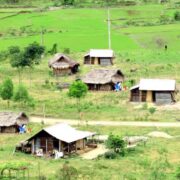
The Central Highlands provinces of Đắk Lắk, Lâm Đồng (Đà Lạt), and Gia Lai form the heartland of production. At elevations between 500 and 1,500 meters, vast plantations of robusta — and increasingly, arabica — thrive in rich basaltic red soil, cool mornings, and a climate agronomists describe as near-perfect for coffee.
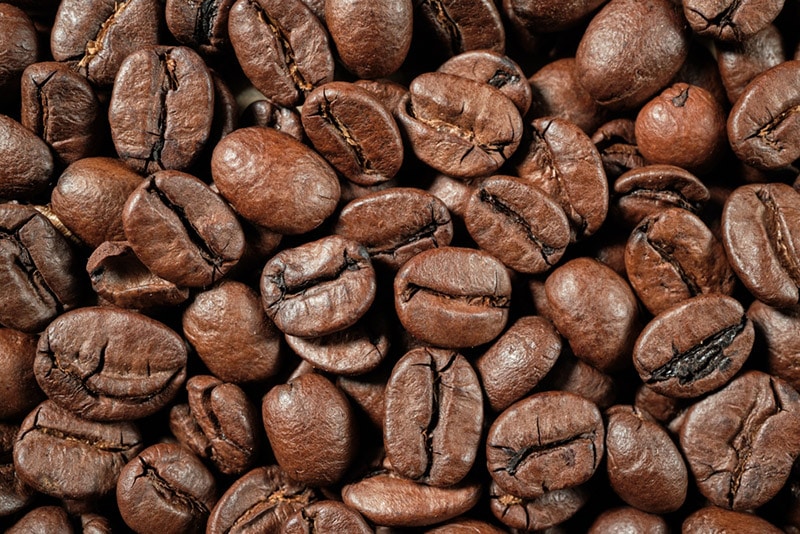
Robusta (Coffea canephora) dominates, comprising roughly 97% of Vietnam’s output. Western specialty culture has long undervalued it — dismissed as “lower grade” compared to arabica. But in the context of the phin, robusta is not a substitute; it is the intention. Its higher caffeine content, lower acidity, fuller body, and notes of dark chocolate, earth, and toasted nuts make it the ideal candidate for slow, concentrated extraction.
A bold new wave of Vietnamese specialty farmers, particularly around Đà Lạt, are now experimenting with heirloom arabica and natural processing methods — producing single-origin cups attracting serious international attention at competitions including the World Barista Championship.
For DMC travelers, a guided morning visit to a working coffee farm in the Central Highlands — touching the soil, picking cherries by hand, understanding the full journey from seed to phin — is a genuinely transformative experience.
🔑 Secret #3 — The Preparation Itself Is the Experience

Ask any Vietnamese person what their national drink is, and the answer — delivered with unmistakable pride — will almost certainly be cà phê sữa đá: iced Vietnamese Phin Coffee with sweetened condensed milk.
The addition of condensed milk was both practical and cultural. Fresh dairy was expensive and difficult to preserve in Vietnam’s tropical climate. Condensed milk — introduced during the colonial period — became the perfect companion to robusta’s bold bitterness. Its sweetness softens, its fat enriches, and the result is a drink of extraordinary balance and depth.
The ritual of preparation is inseparable from the experience itself:
- The phin is placed atop a glass already holding two tablespoons of condensed milk
- Hot water — ideally between 92–96°C — is poured in careful stages over coarsely ground robusta
- The press filter is set, and the world is asked to wait
- Four to six minutes of slow, individual drops
- Ice is added — and with a single stir, golden-brown brew swirls into white milk like smoke through still water
That moment. That is the photograph. That is why travel photographers lose entire afternoons in Vietnamese coffee shops.
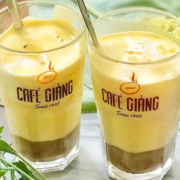
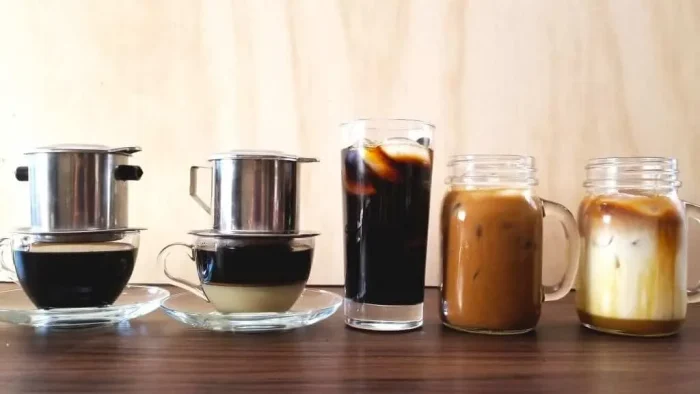
Beyond cà phê sữa đá, Vietnamese Phin Coffee unlocks an entire vocabulary of regional variations: cà phê đen (black), cà phê trứng (whipped egg yolk coffee — a legendary Hanoi specialty), bạc xỉu (Southern-style, milk-heavy), and cà phê muối (salted coffee — a Huế innovation now sweeping the country).
🔑 Secret #4 — The Vietnamese Coffee Shop Is a Living Cultural Institution
In Vietnam, the quán cà phê is not a place to grab caffeine before a meeting. It is a place to live — to think, argue, fall in love, close a deal, or simply watch the city breathe.
Vietnamese Phin Coffee culture operates on a fundamentally different philosophy of time. Nobody is rushing. The phin demands patience, and that patience becomes permission — permission to sit for three hours over a single glass, to linger in real conversation without social anxiety. Coffee shops here are democratic, deeply human spaces that no itinerary should skip.
The physical landscape is extraordinarily varied:
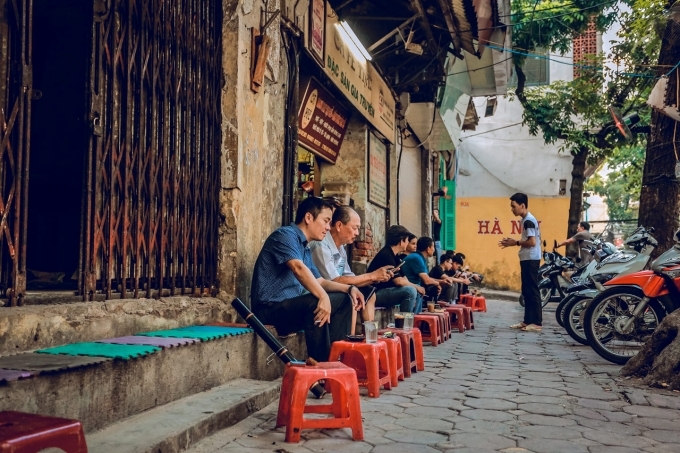
Cà phê vỉa hè (sidewalk coffee) — The most authentic iteration. Tiny plastic stools, a thermos of hot water, tray of phins, and some of the finest people-watching in Asia. Under $1 per cup. More cultural immersion than most museums.

Cà phê sân vườn (garden cafés) — Lush, plant-filled sanctuaries especially beloved in Saigon and Đà Lạt. Hammocks, koi ponds, vintage furniture, and birdsong over a slow phin drip.
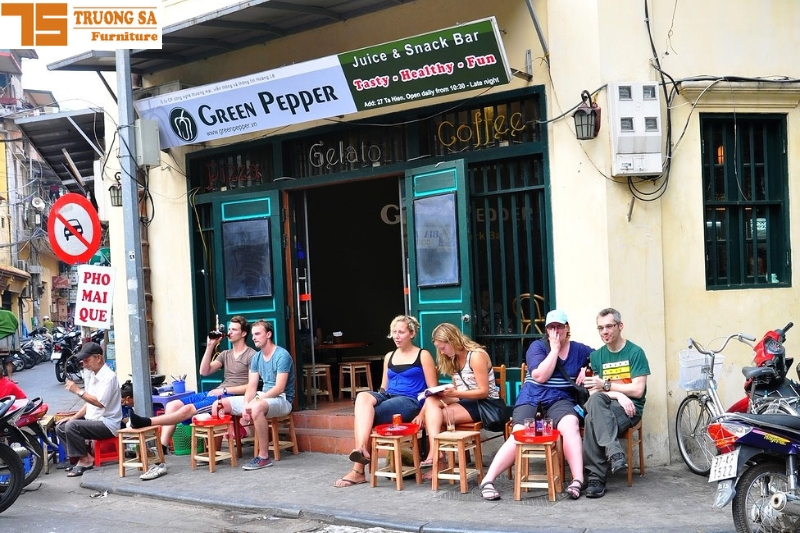
Cà phê cóc (hole-in-the-wall) — A single row of low tables at the edge of someone’s living room, run by a grandmother using the same recipe for forty years. Genuinely irreplaceable.
Third-wave specialty cafés — Hanoi and Ho Chi Minh City now host world-class destinations: The Workshop, Cộng Cà Phê, Shin Coffee, Tranquil Books & Coffee — spaces where young Vietnamese baristas are redefining what Vietnamese Phin Coffee can achieve while fully honoring its roots.
🔑 Secret #5 — Vietnamese Phin Coffee Is the Most Powerful Cultural Tool in Your DMC Itinerary Toolkit
For destination management companies crafting Vietnam programs, the Vietnamese Phin Coffee narrative is a masterclass in experiential travel design. Here’s precisely why it belongs in every itinerary:
1. Accessible yet profoundly local. A phin experience requires no special access, elevated budget, or language fluency. Yet it delivers extraordinary cultural intimacy — the perfect soft entry point for first-time Vietnam visitors.
2. Content gold. A dripping phin over condensed milk is one of the most photogenic cultural moments in Asia. It generates authentic, shareable social content that functions as destination marketing long after the trip ends.
3. Gateway to bigger stories. Vietnamese Phin Coffee opens conversations about French colonialism, Central Highlands terroir, women’s entrepreneurship (most sidewalk vendors are women), and Vietnam’s surprising role in global commodity markets.
4. Scales to any itinerary. From a 15-minute sidewalk stop to a full-day Central Highlands farm immersion with cupping sessions and farmer meet-and-greets — the phin experience fits every program length and traveler profile.
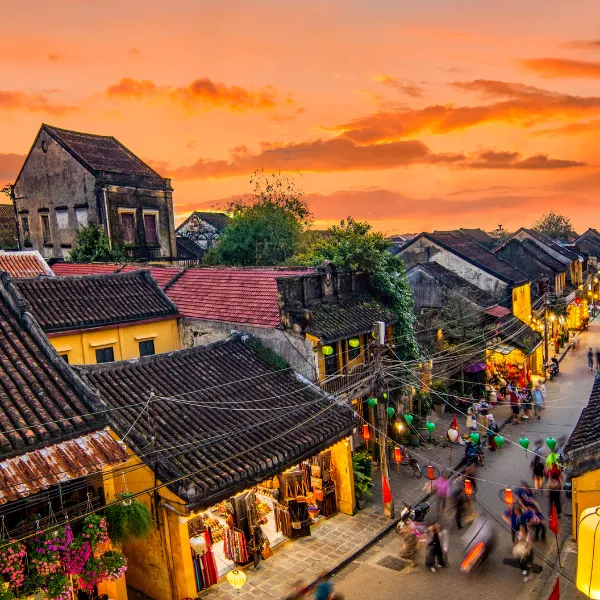
5. Creates the emotional memory that lasts. Travelers don’t remember the hotel rooms. They remember the morning they sat on a plastic stool in Hội An, rain beginning to fall, phin dripping slowly, and nothing else demanding their attention. That is the moment they describe for years. That is the transformative travel memory our programs are built to create.
🌏 The World Is Finally Catching Up to Vietnamese Phin Coffee
Something remarkable is happening globally. As Western specialty coffee spent two decades obsessing over single-origin pour-overs and light-roast arabica — Vietnamese Phin Coffee was quietly doing all of those things, on street corners, for pennies, for over a century.
The global coffee community is catching up fast. Vietnamese robusta is being re-evaluated by Q Graders and specialty buyers worldwide. Vietnamese baristas are competing — and winning — at international stages. The phin itself now sells in design boutiques in Berlin, Brooklyn, and Seoul as an exciting “discovery” product, while in Hanoi, it simply never left the sidewalk.
This is the beautiful, essential irony of cultural travel: what locals consider ordinary is almost always what travelers find most extraordinary. The phin is not a gimmick for Vietnamese people. It is simply Tuesday morning. And that lived-in, unhurried authenticity is precisely what makes it extraordinary for those encountering Vietnamese Phin Coffee for the very first time.
As DMC professionals, our role is to be that bridge — to say: here is a moment. It costs 20,000 dong and four minutes of patience. And it will stay with you for years.
✈️ Let Vietnamese Phin Coffee Drip Into Your Next Itinerary
At Indo-Pacific Travel, our Cultural Snapshot series exists to zoom in on the moments, objects, rituals, and flavors that make a destination irreducible — the things that resist being summarized in a highlight reel, that ask travelers to slow down and truly arrive.
Vietnamese Phin Coffee is one of those things.
Whether you’re a travel agent crafting a bespoke Vietnam program, a MICE planner searching for powerful cultural touchpoints, or an independent traveler ready to go deeper than the surface — we’re here to help you design experiences that begin with a plastic stool, a slow drip, and the most remarkable cup of coffee you’ve never heard of.